A Waiting Room Is Not a Billing Office: What Happened at a SimonMed Bone Scan
On September 28, 2026, a routine imaging appointment at SimonMed Imaging in Surprise, Arizona, turned into a public argument about a named medical test and a payment that should never have been demanded in a lobby.
The appointment was a 10:35 a.m. bone scan, the second one in about six months. It was ordered by a VA-approved IVF physician as medically necessary monitoring during ongoing fertility treatment. The same facility had already performed the earlier scan. The same VA/TriWest information was already in SimonMed’s system from that prior visit and from the telephone scheduling of this one.
What should have taken about fifteen minutes lasted more than an hour and a half.
After the wait came the public conversation
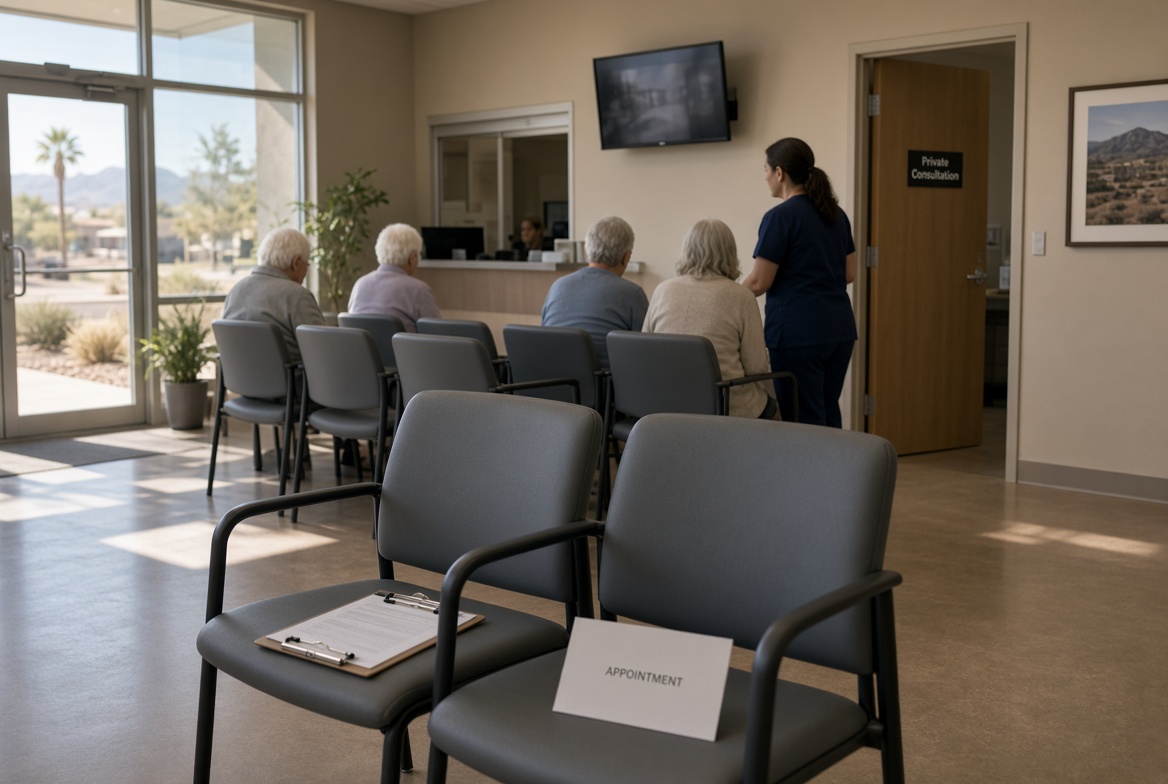
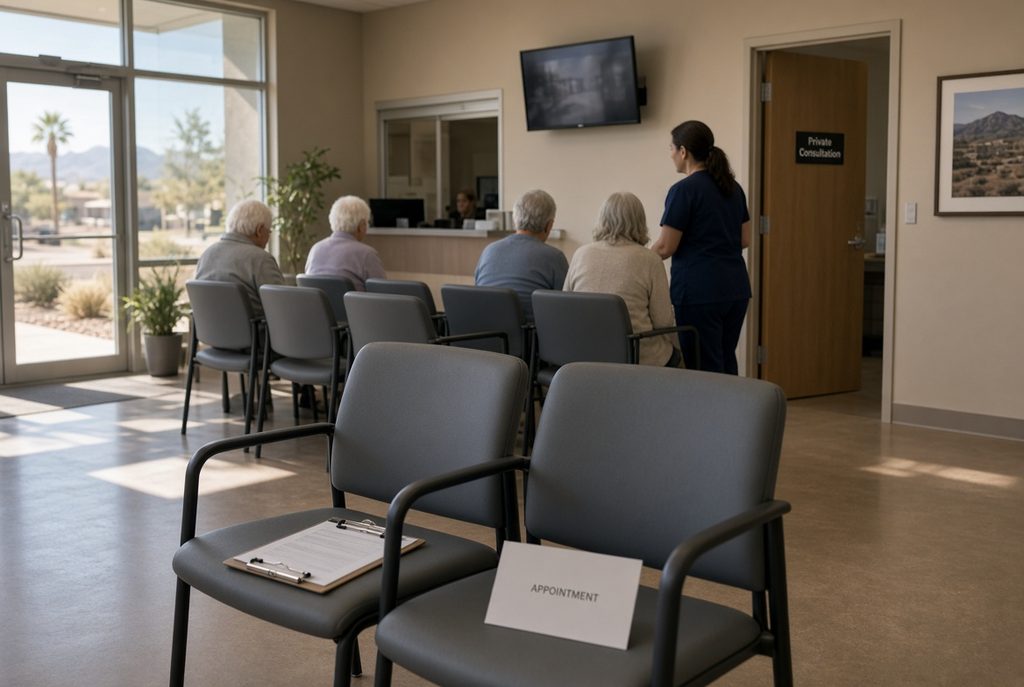
Check-in was completed. The waiting room was full. More than an hour passed. Then a technician apparently noticed the prior scan and involved management.
A woman from management — later believed to be named Linda — walked into the crowded lobby and told the patient that SimonMed could not do the scan unless she paid about $60. She also said, where other patients could hear it, that insurance companies will not pay for more than one bone scan per year.
She used the actual test name. Not “your imaging.” Not “your appointment.” Bone scan.
That is the first problem.
A waiting room is a public space. Other patients were sitting there with nothing to do but listen. Naming the test, mentioning that it was a second scan, and attaching a coverage lecture to that name told the room more than it had any reason to know.
Federal privacy rules allow a clinic to call a name at check-in. They do not give staff a free pass to discuss a specific exam, a prior exam, and a payment demand in front of strangers. That is more than the minimum necessary. It is also the opposite of “discreet” care, which SimonMed’s own patient-rights language promises.
The patient is an Asian-American woman in her mid-thirties. Her disabled husband was outside in the car with their toddler because the appointment had already run far past the scheduled time. She was left to handle a coverage fight in public.
The coverage statement was the wrong rule
The second problem is that the statement itself was not tied to this payer.
VA/TriWest coverage is not “insurance companies” as a group. It is a specific authorization attached to a VA-approved physician. That authorization has a payer ID and a defined scope. The IVF doctor who ordered the scan is the clinician whose episode of care includes the tests that doctor is allowed to request. Imaging centers that work with VA community care are supposed to run that authorization number. The system then answers: approved, not approved, or another status. In this case, a SimonMed employee later said the number carried an “R” designation meaning no authorization was needed.
That check is not exotic. Other testing facilities run the same number every day.
SimonMed did not run it before the lobby confrontation. Staff saw a prior bone scan inside a year and applied a generic commercial rule: one scan per year, all insurance lumped together. Then they announced that rule out loud.
Only after the patient called to complain, after a promised management callback never arrived, and after her husband called back around 6:30 p.m. and explained the entire incident a second time, did someone look at the VA number and describe the “R” status.
If the number could be read that evening, it could have been read before anyone asked for $60 in a full waiting room.
What this looks like, and what it does not prove
It does not automatically prove that a particular employee opened the VA screen, saw “no authorization needed,” and decided to ignore it. That would be willful override. What the facts do show is more than enough:
They had the VA authorization in the system from scheduling and from the prior scan.
They did not run it before demanding money.
They substituted a blanket one-per-year rule.
They said the specific test name and that incorrect rule in public.
They later confirmed the VA number was readable the same day.
That is incompetence in verification. It is also a privacy failure, because the public argument only happened after they skipped the check that would have made the argument unnecessary.
There is a separate concern about how the patient was treated compared with others in the same lobby. She sat there more than an hour. She watched older patients raise their own issues and get a quieter, less accusatory approach. She cannot know what motivated the representative. Motive is not required to say the handling felt singling-out, chastising, and out of scale. A mid-30s woman in fertility care should not be the person a manager chooses to lecture about “insurance companies” in front of a room.
Then came the last failure: a SimonMed representative told her that management would call her husband, who was helping with the matter. That call never came. He had to initiate the 6:30 p.m. conversation himself. A facility that has just conducted a public coverage dispute does not get to “forget” the follow-up it promised.
Conclusions
First, saying “bone scan” plus a payment and frequency lecture in a crowded lobby is not a harmless check-in. It is an avoidable disclosure of medical and billing information. Generic language and a private office exist for a reason.
Second, VA/TriWest is not a commercial one-scan-per-year product. Before a facility tells a patient that insurance will not pay, it has to run that patient’s actual authorization. Lumping every payer into one slogan is how veterans and fertility patients get shaken down at the desk for charges that do not apply.
Third, the length of the visit, the public setting, the wrong coverage rule, and the ignored callback are one pattern, not four isolated oopses. The scan being performed at the end does not fix the pattern. It proves the delay and the humiliation were unnecessary.
Fourth, observed difference in tone toward a younger female patient is part of the story even if intent cannot be proven. Dignity is a patient right SimonMed publishes. Public chastisement in a full lobby is not dignity.
Fifth, this kind of treatment is unacceptable for any imaging provider, and especially for one that serves veterans and people in sensitive medical care. The rule is simple: verify the real coverage first, speak privately, and do not use a waiting room as a collections counter.
A clinic can call a name. It cannot try a patient’s bone scan, her fertility-related monitoring, and her VA benefits in front of an audience.